From chicken run to living ground
Reviving a tired, compacted strip around two declining cherry trees — with plant guilds, sheet mulch, a wildflower meadow, and compost that rebuilds the Soil Food Web. Built in phases, together with four children.
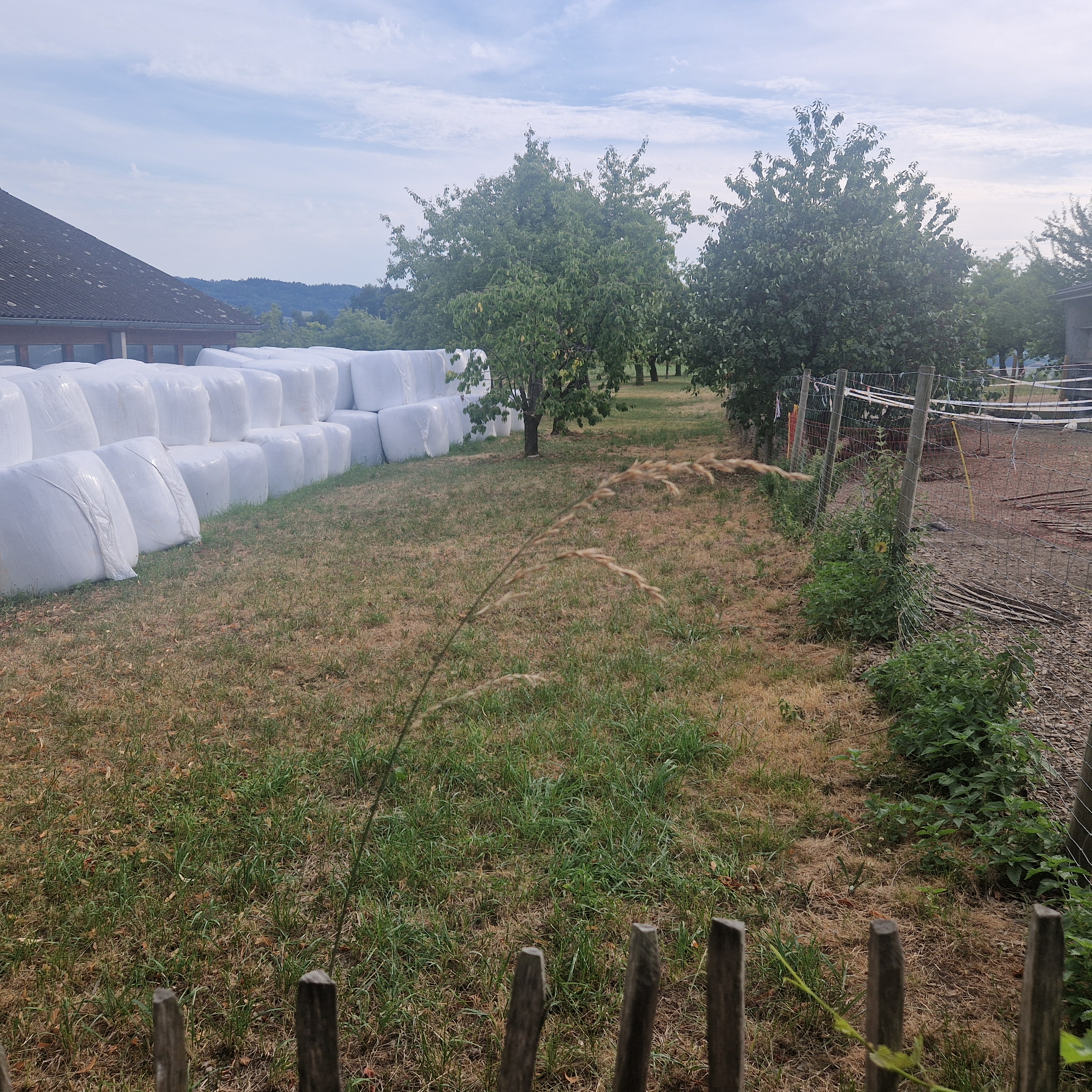
A small piece of ground, brought back to life by the life within it
For years, this strip fed chickens. The chickens are gone, but they left their mark: bare patches, compacted soil, moss instead of meadow, and two cherry trees visibly struggling.
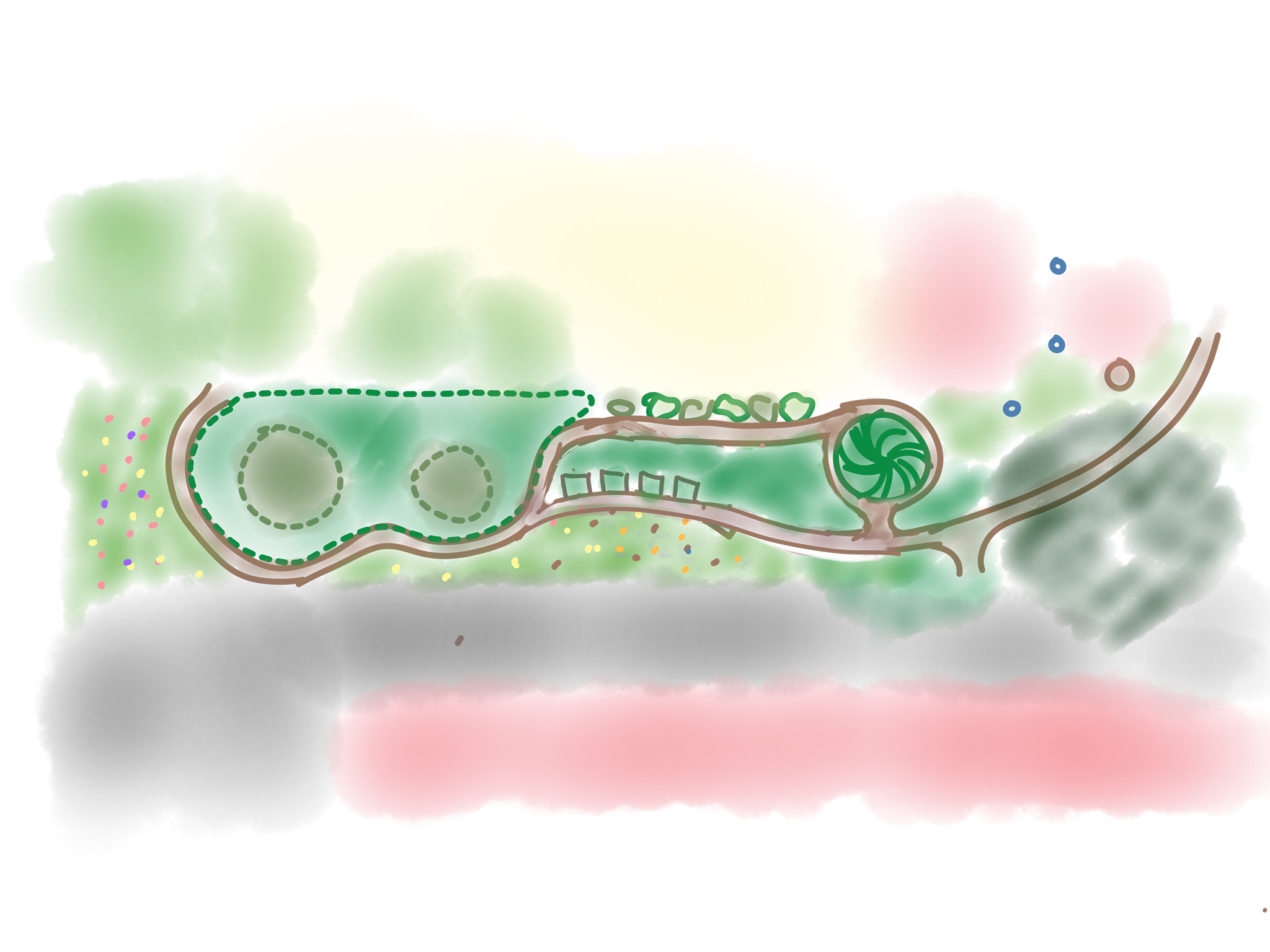
The design works in loops. Around each cherry tree, a guild of comfrey, lucerne and clover builds fertility in place and grows the high-nitrogen material for compost. That compost carries a living Soil Food Web back into the whole strip. Along the sunny southern edge, a wildflower meadow gives back to the pollinators — and a willow tipi and four raised beds give the ground to the four children who will grow up with it.
Site analysis
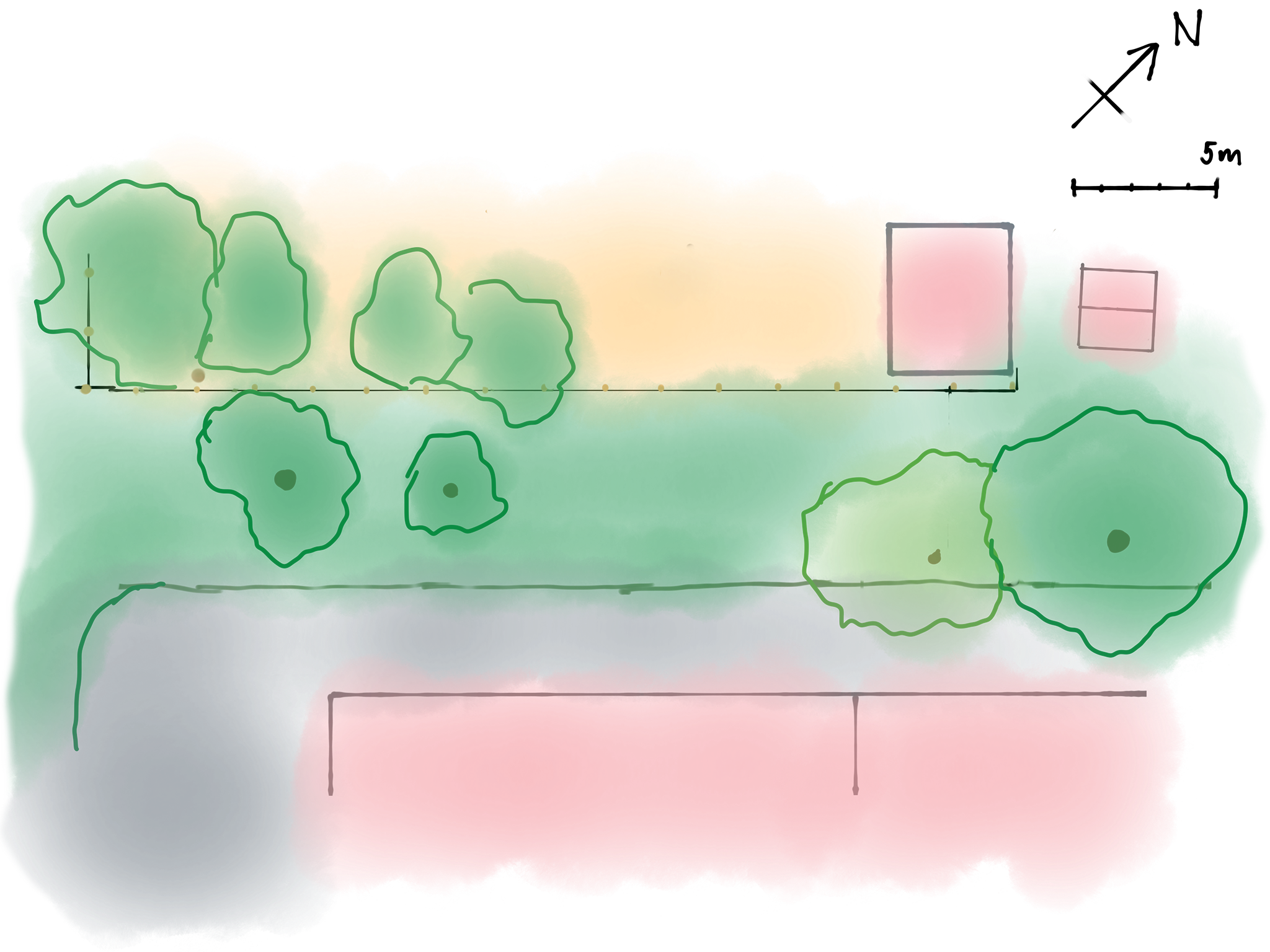
A long, narrow strip — roughly 34 × 6 m — between the neighbour's active chicken run to the north and the gravel path and barn to the south, with the orchard opening to the west. Read before touched: a season of observation shapes everything that follows.
History
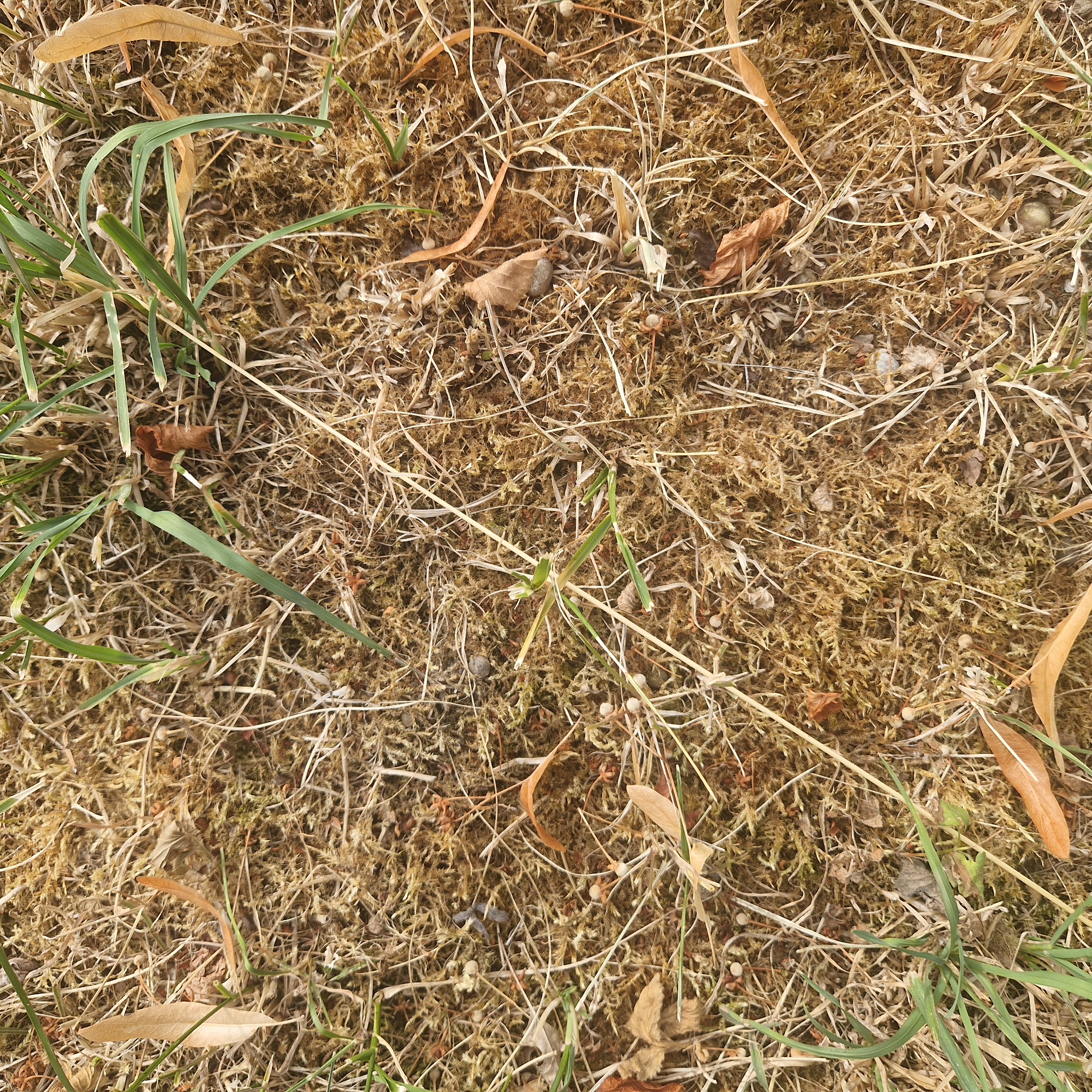
Used as a chicken run until about five years ago. Years of scratching and droppings suggest nutrient-rich but compacted, biologically depleted topsoil. Rank grass — and a telling carpet of moss — have since taken over.
Slope & water
Gentle fall from the north-east down to the south-west. The high north-east corner is among the driest ground; what moisture there is lingers longest at the low SW run-out. Roof runoff from the barn across the path is the nearest catchable water source.
The cherry trees
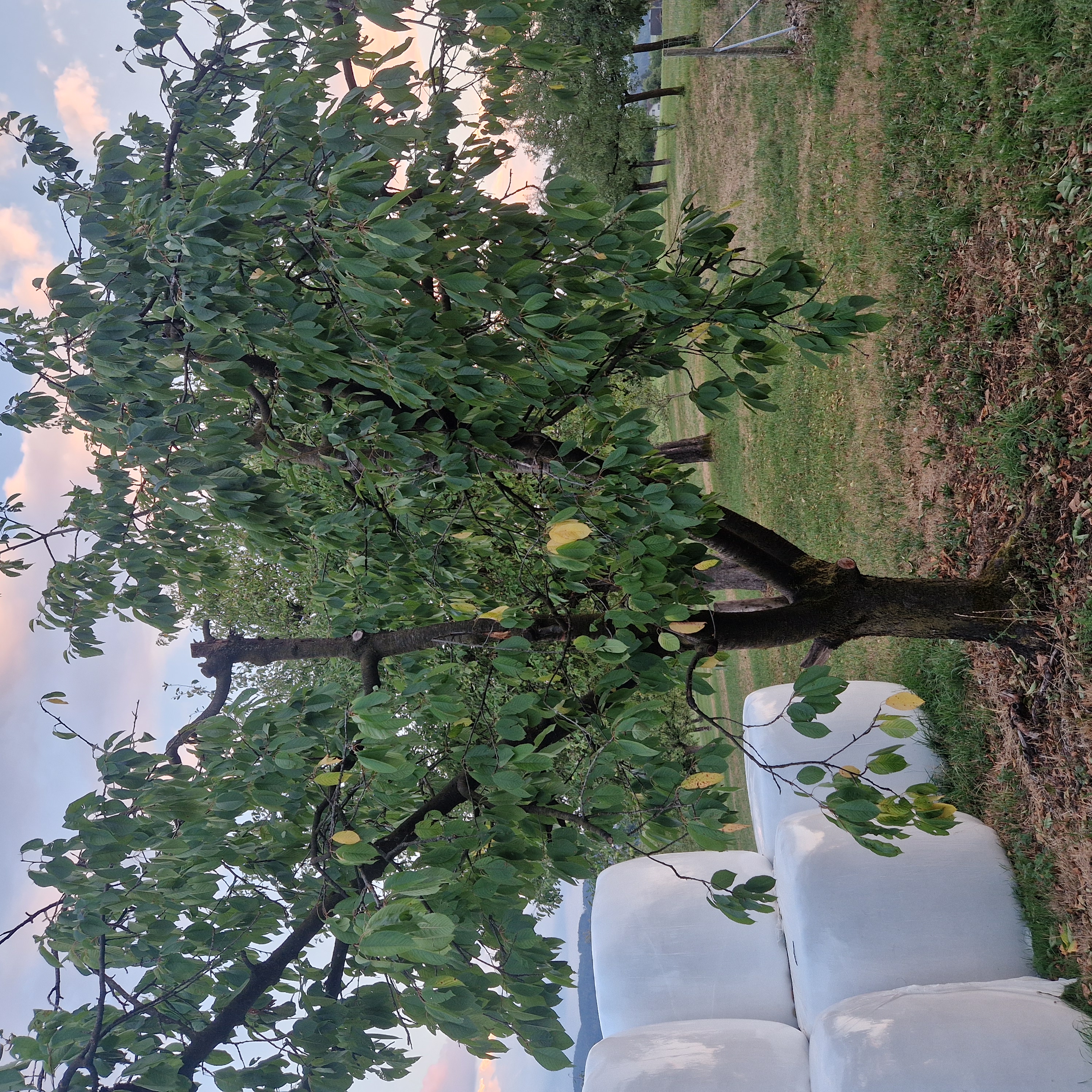
Two mature cherries at the eastern end, both in visible decline — sparse crowns, dead wood. Likely stressed by compaction and disrupted soil biology rather than any single disease.
Edges
The fence to the north borders the neighbour's hens — scratching pressure kept out, manure kept in reach. To the south, the gravel path gives access along the whole length; the disused beehouse sits at the north-east corner.
Sun & wind
Open to the south across the path — good light through the day. Prevailing westerlies arrive softened by the orchard trees.
Access
The gravel path runs the full southern edge — materials, barrows and compost turn-outs can reach any point of the strip without crossing the beds.
Micro-climate analysis
Three micro-climates within one strip. Along the north fence: open and airy, first to dry after rain. The middle: full sun, exposed to the westerlies that funnel past the orchard, driest ground in summer. Under and east of the cherries: dappled shade, cooler, and — at the low south-west run-out — the last ground to dry. Observed within this single season, per course scope.
Plants, trees & animals
Working list from this summer's observations. Mushrooms and insects count too.
Trees & shrubs
- 2× sweet cherry, mature, declining
- Young trees along the fence line
- Orchard fruit trees to the west
Plants
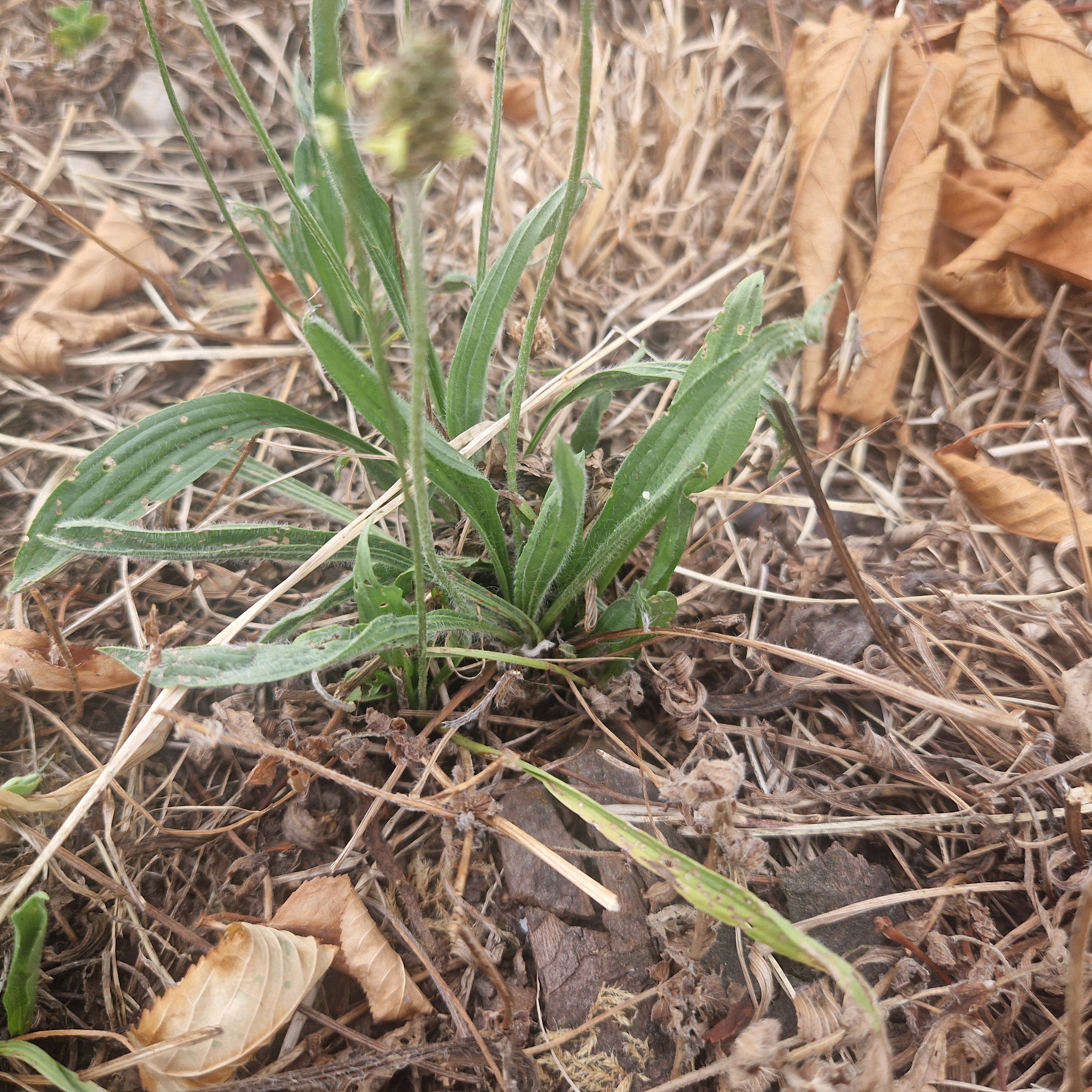
- Ribwort plantain — throughout
- Moss throughout — compaction sign
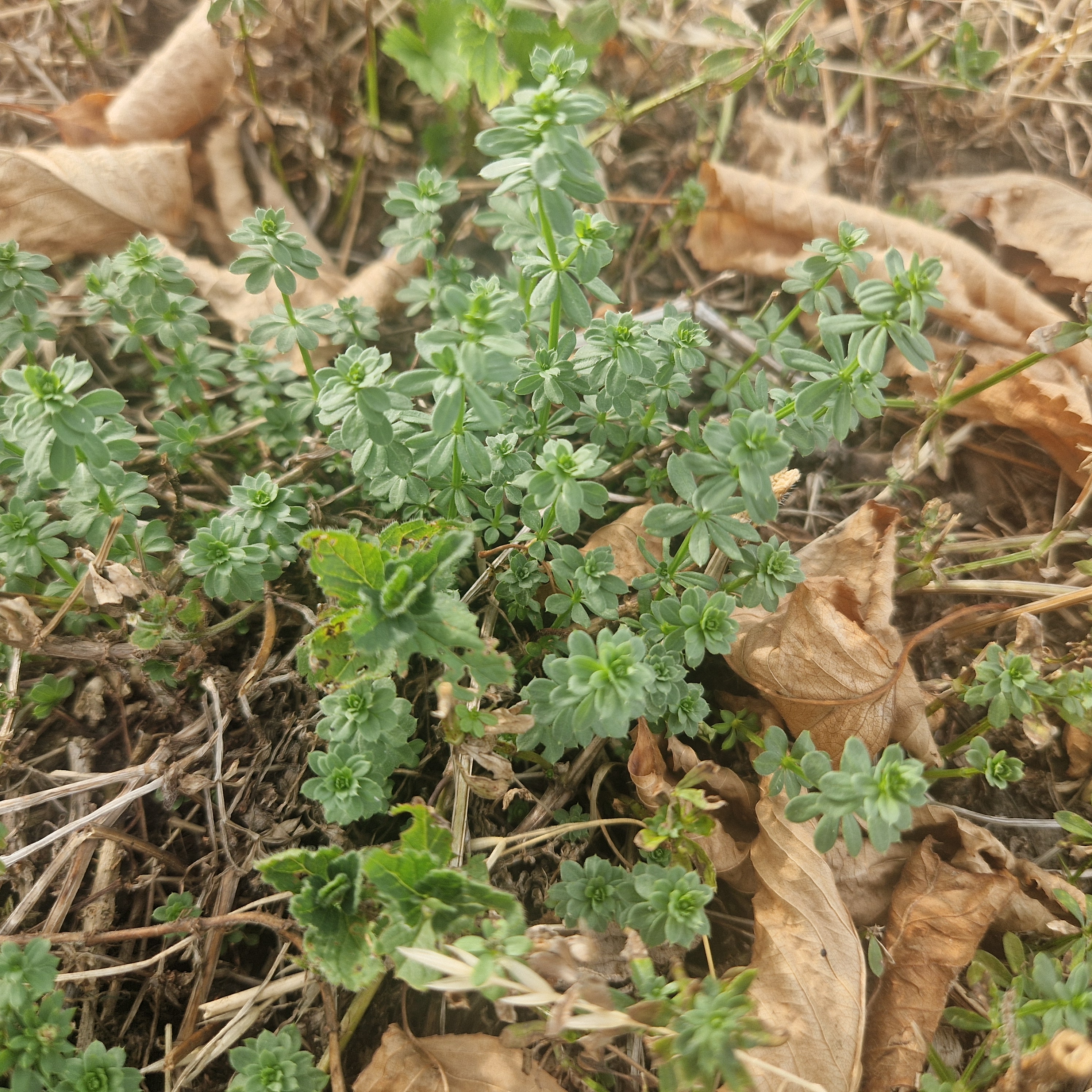
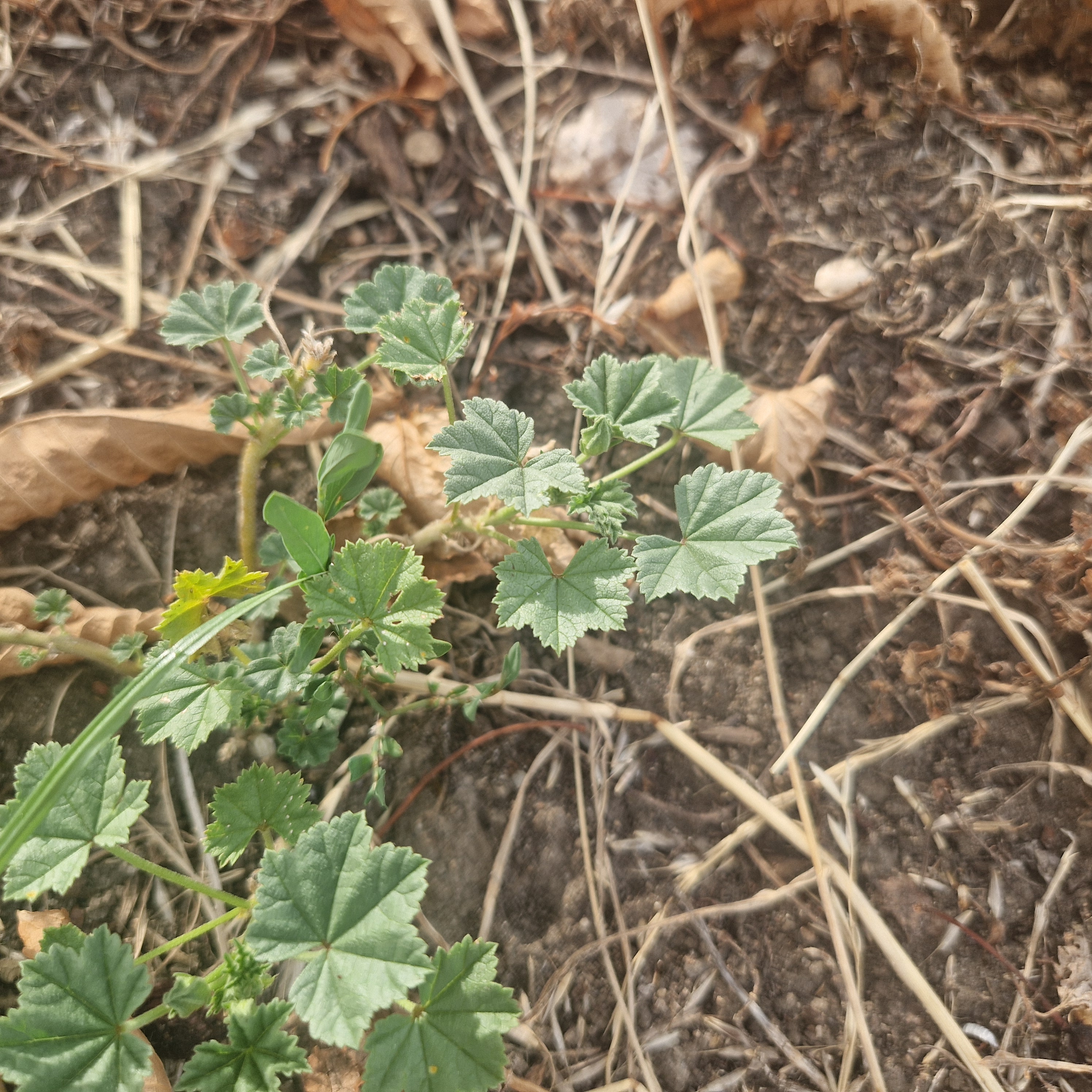
- Germander speedwell & bedstraw — below the cherries
- Dove's-foot cranesbill — below the cherries
- Rank grasses; nettles at the fence
Animals & insects
- Hens next door (visiting influence)
- Blackbird, great tit in the cherries
- Bumblebees from the orchard
- Slugs; earthworms — few so far
Fungi & soil life
- No fruiting bodies observed yet
- Autumn mushroom walk planned
- Baseline microscopy with first soil test
The map, layer by layer
One hand-drawn base map, with hand-painted transparent overlays laid over it. Choose one at a time — or none to read the plain map. On the sectors, zones, plants and final design, hover over the markers to read each element.







{{ mapCaption }}
Add, change, remove — and why
Every decision below follows directly from the sector and slope observations on the map — the sun along the south, the moisture in the south-west, the shade under the cherries, and the daily path of four children.
Cherry guilds
Comfrey, clover and lucerne under each crown. Deep roots break compaction and mine nutrients; legumes fix nitrogen; the whole ring becomes the cutting bank for the compost. Placed exactly where the sector map shows dappled shade and where the trees need help most.
Wildflower meadow, tipi & beds
The meadow claims the full-sun southern edge — the sector the sun overlay marks as the site's richest energy. The willow tipi sits in the north-east corner by the children's daily path; that corner is not naturally moist, so the ground is levelled into a shallow sunken basin fed by roof and path runoff to hold the water the rods need. Four raised beds sit in Zone 1, right where the children pass every day.
End the mowing regime
The rank grass and moss carpet — the compaction the whole site analysis points to — is removed without digging: sheet mulch smothers it in place and feeds the soil as it breaks down. What was mowed and hauled away now stays and cycles.
Remove the dividing fence
The fence that cut the strip off from the rest of the garden comes out. With it gone, the garden becomes one continuous space — daily movement and care flow straight through, and the old chicken run rejoins the zones instead of sitting stranded at the far edge.
Why? The challenge is biological: compacted, depleted soil and two trees starving above it. The design answers with biology — no machines, no imported fixes. Zone logic puts the daily elements (beds, tipi) at the path entrance and the seasonal ones (meadow, cherry guilds) further out; sector logic gives the sun edge to the pollinators and the cherry-tree shade to the guilds — while the willow's moisture is engineered with a sunken catch-basin rather than found ready-made.
Elements × functions
Every element performs at least two functions; every function is carried by at least two elements. If one part fails, the system holds.
| Element | Builds soil Soil Food Web |
Food fruit & veg |
Habitat pollinators, birds |
Holds water moisture, mulch |
Play & learning the four kids |
N & biomass chop & drop |
|---|---|---|---|---|---|---|
| Cherry guilds | ||||||
| Wildflower meadow | ||||||
| Raised beds (×4) | ||||||
| Willow tipi | ||||||
| Compost windrow | ||||||
| Sheet mulch |
Guilds feed bees and the compost; the compost feeds the beds the children plant; the mulch the children help lay holds the water the meadow needs. Each function is doubled — the compost teaches as much as it feeds, and laying mulch is the first thing the kids build with their hands.
Built with the seasons
Small and slow: each phase prepares the next, and nothing is planted into ground that hasn't been fed first.
- Sheet mulch under both cherry trees — cardboard, compost, woodchips
- Sheet mulch the woodchip paths through the strip
- Sheet mulch the berry nibble-strip along the path
- Build the willow-rod tipi with the four children
- Cut and weave dormant willow rods — they root readily in winter
- Level the corner into a shallow sunken catch-basin, fed by roof and path runoff, so the whole tipi sits in one moist zone the willow needs
- Plant the berry bushes alongside the fence of the neighbour's chicken run
- Sow clover and lucerne, plant comfrey — the cherry guilds take shape
- Place the 4 raised beds and sow a green-manure cover on the “to be decided” patch
- Harvest cherries, berries and the beds — and cut high-N material from the guilds
- Build the compost silo from the cuttings and the season’s greens
- Return the finished compost and compost extract to the strip — the Soil Food Web comes home
- Watch the “to be decided” patch and the other open ground across a season or two
- Keep them under a clover / green-manure cover so the soil keeps building
- Let use, sun and moisture reveal each area’s purpose — then integrate it
Ethics & principles
Earth care
The whole design serves one patient: the soil. No tillage, no synthetic inputs — compaction is undone by roots, fungi and mulch, and fertility returns as biology, not as a bag.
People care
Four children get a bed of their own, a den of living willow, and cherries worth climbing for. The work is sized so a family can actually do it — phase by phase, season by season.
Fair share
The sunniest edge goes to the pollinators, not to production. Surplus cherries, seed and finished compost are shared over the fence — starting with the neighbour whose hens started this story.